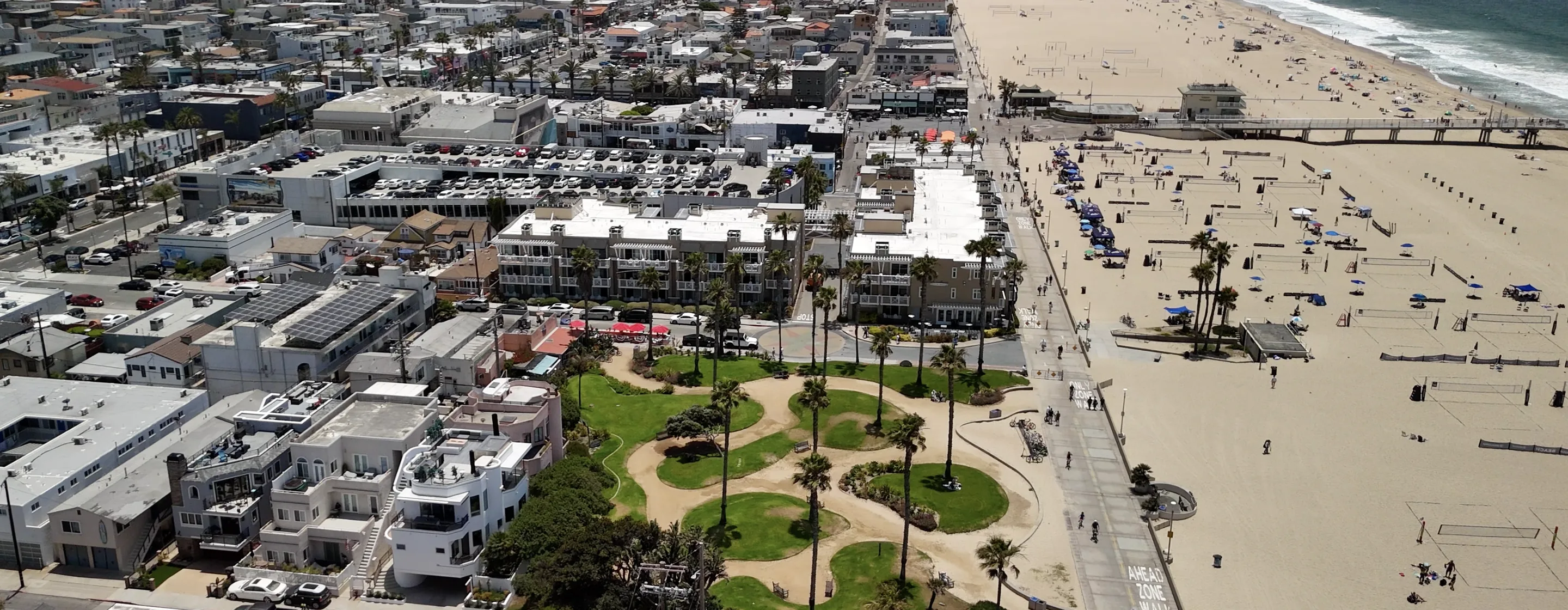
Manhattan Beach: Integrates upscale residential streets directly with an elevated downtown core and iconic pier.
LOS ANGELES SOUTH BAY LIFESTYLE
Living in the Los Angeles South Bay: Lifestyle, Recreation & Community
What can everyday life here actually look like?
More than being near the ocean
An ordinary week has more in it than the beach
Living in the South Bay means much more than simply being close to the ocean. An ordinary week might include an early surf session at El Porto, a bike ride along The Strand, sailing out of King Harbor, or a weekend hike along the Palos Verdes bluffs. For others, daily life may revolve around neighborhood parks, farmers markets, youth sports, or dinner in walkable districts such as Riviera Village or Downtown Manhattan Beach.
Many of these experiences cross city lines. The coastal bike path connects much of the shoreline, while parks, recreation programs, festivals and cultural activities extend from the Beach Cities through Torrance and the Palos Verdes Peninsula. Families can build entire weekends around playgrounds, sports, sailing programs, outdoor concerts, beaches and community events without having to travel far.
That variety is one of the defining qualities of the South Bay. You do not have to surf, sail or play beach volleyball to enjoy living near the coast. There are many ways to spend time outdoors, stay active, meet people, entertain children, explore the water, enjoy food and culture, and become part of the broader community.
02
Sailing
Sailing Santa Monica Bay: King Harbor and Marina del Rey
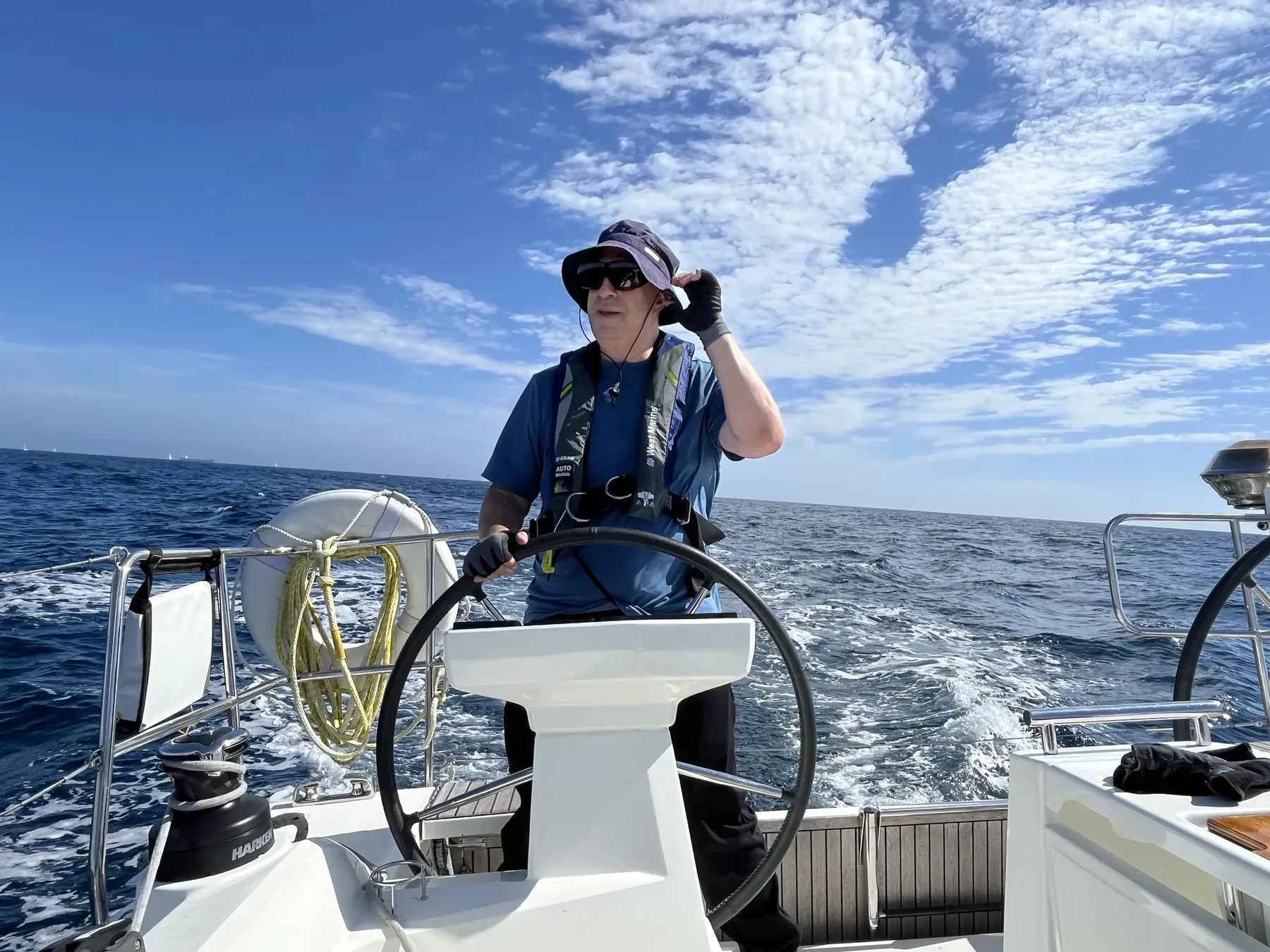
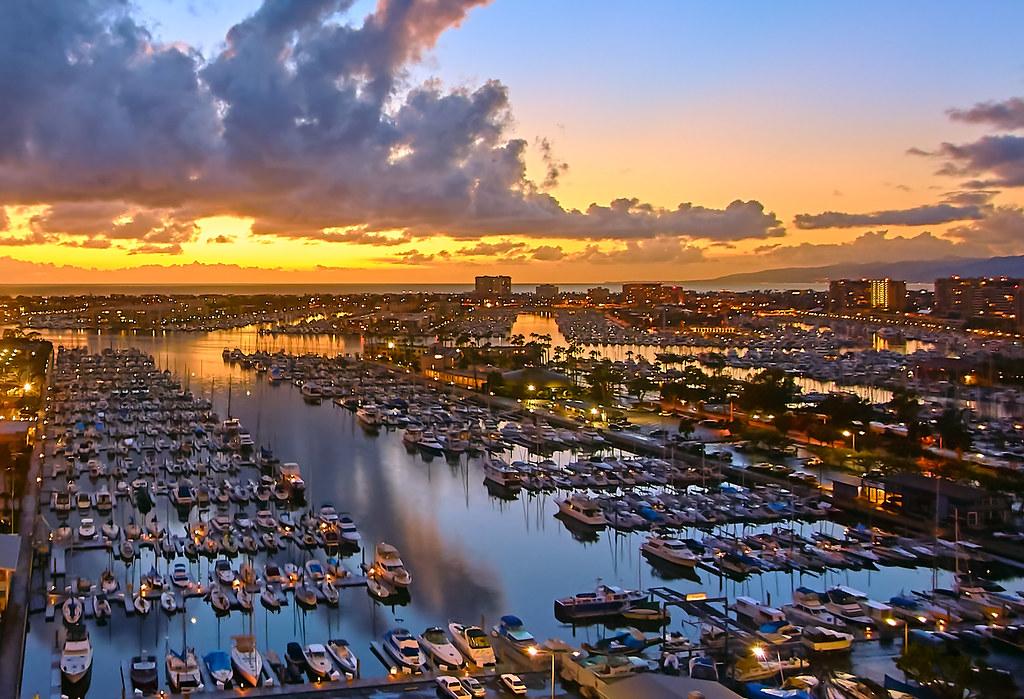
Sailing is one of my own interests, and it is one of the reasons I wanted to include lifestyle on this site rather than talk only about houses and neighborhoods. Santa Monica Bay gives someone who is curious about sailing several ways to get started—from taking a first lesson or putting a child into a summer program to joining a club, crewing in a race, chartering a boat or eventually sailing independently.
For people in the Beach Cities and Los Angeles South Bay, the two principal sailing hubs are King Harbor in Redondo Beach and Marina del Rey, just north of Manhattan Beach beyond El Segundo and LAX. They are very different in scale, but both have active sailing communities and multiple ways to get onto the water.
| Harbor | Where it is | Scale | What is there | How people start |
|---|---|---|---|---|
| King Harbor | Redondo Beach — inside the Beach Cities themselves | One working marina on the South Bay coastline | King Harbor Youth Foundation programs and King Harbor Yacht Club one-design, handicap, junior and twilight racing | Optis, FJs and Martin 242s for juniors; Cal 20s and Martin 242s for adult instruction and charter |
| Marina del Rey | North of Manhattan Beach, beyond El Segundo and LAX | Much larger — more than a dozen boating, rowing, yachting and sailing clubs | Sailing schools, yacht clubs, charter fleets, organized boating programs and year-round club series and regattas | Certified schools, yacht-club programs and private instruction, through to catamarans and offshore sailing |
01
King Harbor
The sailing center inside the Beach Cities
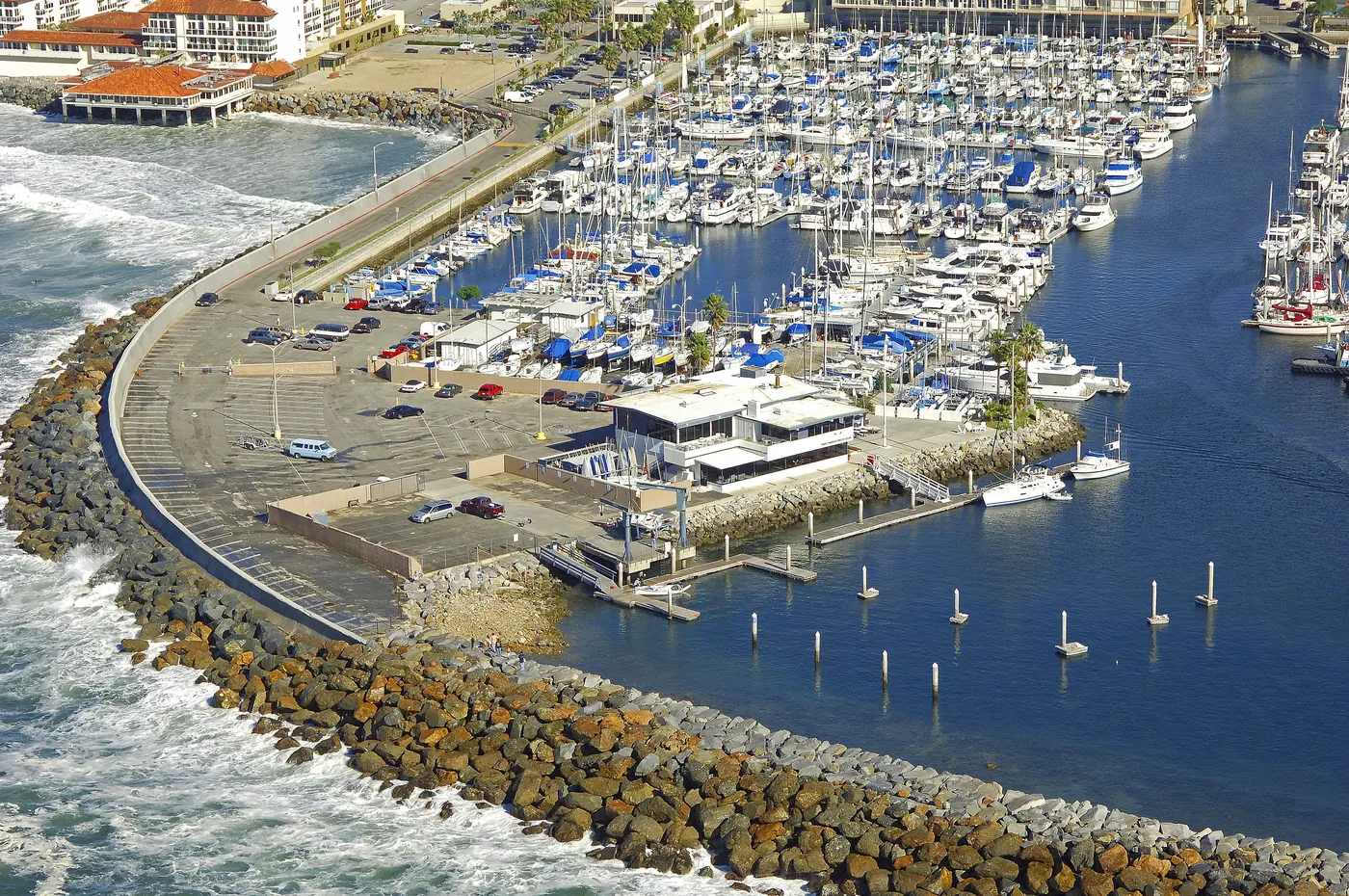
King Harbor is the sailing center directly within the Beach Cities. The harbor supports recreational sailing, adult instruction, youth programs and an active racing community.
The King Harbor Youth Foundation offers programs ranging from beginner instruction through competitive sailing. Local sailors and sailing families will recognize boats such as Optis, FJs and Martin 242s, while adult instruction and charter opportunities also include Cal 20s and Martin 242s. The result is a relatively accessible progression from learning basic sailing skills to becoming more involved in the sport.
Racing is an important part of King Harbor as well. King Harbor Yacht Club supports one-design and handicap racing, junior sailing, twilight racing and larger regattas. For someone who becomes interested in competitive sailing, racing can also provide another way to get involved without necessarily beginning as a boat owner.
King Harbor's location makes it particularly relevant to people in Redondo Beach and the other Beach Cities, because a working marina and sailing community sit directly on the South Bay coastline rather than requiring a trip elsewhere in Southern California.
02
Marina del Rey
Much larger, and a short drive north
Marina del Rey is much larger and offers a broader concentration of sailing schools, yacht clubs, charter fleets and organized boating programs. More than a dozen boating, rowing, yachting and sailing clubs operate there, along with private and group instruction, charter companies and membership-based ways to use boats.
For someone starting from scratch, Marina del Rey offers several routes into sailing through certified schools, yacht-club programs and private instruction. More experienced sailors can move into club racing, cruising, larger boats, catamarans and offshore sailing. Youth sailing is also well established, so the marina works for everyone from a child taking a first sailing class to an adult preparing for longer coastal passages.
The marina also has an extensive racing culture, with regular club series and regattas throughout the year. That makes Marina del Rey more than a place to store boats—it is a large sailing community with opportunities to learn, compete, cruise and simply spend more time on the water.
03
The part most people get wrong
You do not need to own a sailboat to start
One of the misconceptions about sailing is that becoming seriously involved eventually requires buying a boat. It does not.
I am a member of Naos Yacht Club in Marina del Rey, which is a good example of the alternatives. Naos has a popular sailing school, club boats, a SailTime membership program and a variety of organized sailing activities. Members can take part in races, social sails and flotillas, including trips to Catalina and the Channel Islands, while gaining experience on newer Beneteau sailboats without having to own and maintain one themselves.
The sailing school offers a progression from introductory courses through advanced coastal cruising, and Naos and SailTime provide access to modern boats after the lessons are over. SailTime's Marina del Rey fleet includes newer Beneteau monohulls, while Naos uses modern Beneteau yachts in its instructional programs.
That combination of instruction, shared boat access, racing, organized cruising and a built-in sailing community is unusual and gives someone several ways to participate depending on experience and interest. You can learn first, sail regularly, find people to sail with and decide much later—if ever—whether owning a boat makes sense.
The same principle applies more broadly at both King Harbor and Marina del Rey. Someone interested in sailing can take lessons, charter boats, join organized programs, meet other sailors or learn to crew before making any major commitment.
For children and teenagers, sailing can also become a long-term sport rather than simply a summer activity, with pathways from introductory programs into racing and more advanced competition.
03
On the water
You do not need a sailboat to make the ocean part of your life
One of the advantages of the South Bay coastline is how many ways there are to get onto the water without owning a boat. Surfing may be the most visible, but the same stretch of coast supports stand-up paddleboarding, kayaking, ocean swimming, traditional paddleboarding, bodysurfing, bodyboarding, fishing and other water sports.
01
Surfing the Beach Cities
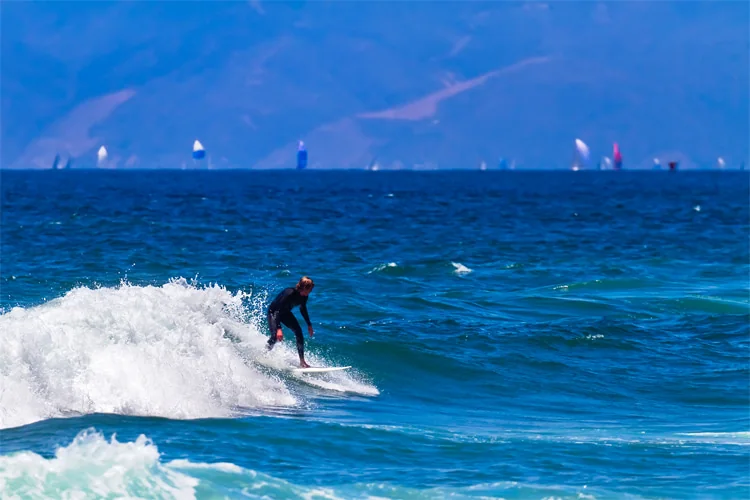
El Porto in north Manhattan Beach is one of the South Bay’s best-known surf areas and an obvious place to start the conversation. Surfing continues south through Manhattan Beach and Hermosa Beach, with conditions changing by location, swell, tide and season. The point is not that every stretch of beach works the same way, but that surfing is part of everyday recreational life in the Beach Cities rather than something residents have to drive far away to find.
For someone who has never surfed, there are lessons, camps and beginner programs throughout the area. More experienced surfers can make it part of an ordinary morning or weekend depending on conditions. Surfing is also visible through local competitions and the annual International Surf Festival.
02
Paddle, kayak or swim
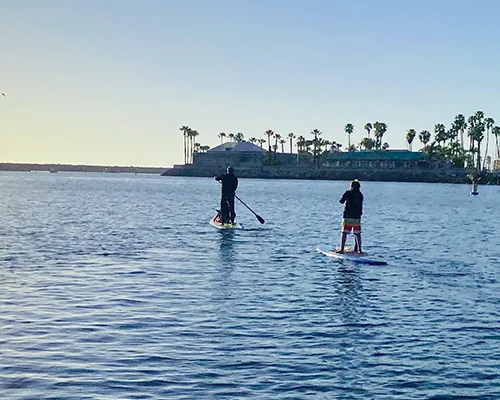
The protected water inside King Harbor offers a different experience from the open beach. Stand-up paddleboarding and kayaking provide relatively approachable ways to spend time on the water, while the harbor also gives people access to fishing, boating and other marine activities.
Traditional ocean paddleboarding has particularly deep roots in the South Bay. The International Surf Festival’s Velzy-Stevens Pier-to-Pier Paddle runs from the Manhattan Beach Pier past Hermosa, while other festival events include paddleboard racing, bodysurfing and ocean swimming.
Open-water swimming is another established part of the local ocean culture. The Dwight Crum Pier-to-Pier Swim, held between Hermosa and Manhattan Beach, dates to the early years of the Surf Festival and remains one of its signature events. You do not need to enter a race to swim in the ocean, of course, but events like this show how much recreational life here takes place in the water rather than only on the sand.
For a more protected swimming experience, Seaside Lagoon at King Harbor in Redondo Beach offers a seasonal saltwater lagoon with a sandy beach and children’s play area. It gives families and recreational swimmers another way to enjoy salt water without swimming directly in the open ocean. The City of Redondo Beach operates the lagoon seasonally, typically from Memorial Day through Labor Day.
03
The ocean can be as active—or as simple—as you want it to be
Not everyone wants to race, surf large waves or train for an open-water swim. For many people, getting onto the water means paddling around King Harbor, taking a beginner surf lesson, bodyboarding with the kids, fishing from the waterfront or simply going for a swim when conditions are comfortable.
You can approach these activities casually or make one of them a serious hobby. A beginner can take a lesson or rent equipment, children can start with camps and supervised programs, and experienced surfers, paddlers and swimmers have organized events and competition available if they want it.
04
The Strand
The Strand is where the Beach Cities come together
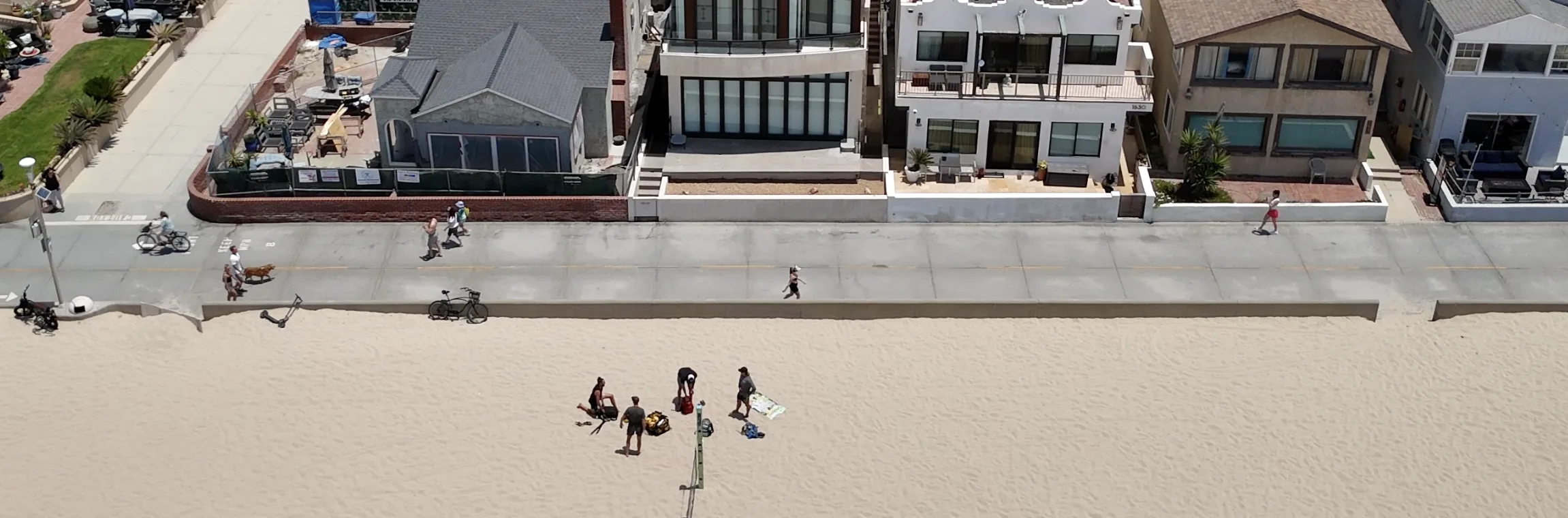
One of the defining qualities of the Beach Cities is that the coastline is directly integrated into daily life. The beach, The Strand (officially the Marvin Braude Coastal Bike Trail), local piers, and several of the area’s most active commercial districts sit alongside one another, functioning almost like a continuous public commons running through the region.
That relationship is especially clear in Manhattan Beach and Hermosa Beach. In Manhattan Beach, The Strand passes directly below multi-level beachfront homes in the Sand Section before meeting the pier a short walk from downtown. Continuing south, the setting gradually shifts until Hermosa’s Pier Avenue runs straight toward the ocean and opens into Pier Plaza. While municipal boundaries are real, the transition along the pedestrian pathway feels remarkably seamless.
01
The coastline changes character as you move through it
Manhattan Beach, Hermosa Beach, and Redondo Beach share the same coastline, but their waterfronts offer distinctly different experiences:
Hermosa Beach: Features a concentrated, energetic beachfront social hub around Pier Plaza, with outdoor dining immediately beside the path.
Redondo Beach: Transitions from open beach into the distinct maritime infrastructure of the Redondo Beach Pier, International Boardwalk, and King Harbor.
02
The Strand has its own daily rhythm
Early in the morning, the pathway belongs to runners, cyclists, surfers checking conditions, and residents starting their day before traffic builds.
By afternoon, the environment shifts: beach volleyball courts fill, families arrive, and movement flows continuously between the sand, the bike path, and adjacent commercial districts. In the evening, the piers and beachfront become natural gathering places for dinner or a walk along the water.
03
An essential framework for home buyers
For someone evaluating South Bay real estate, spending time along The Strand explains local market dynamics in a way a map cannot.
It reveals how elevation changes, parking density, and street orientation dictate daily life. Measuring "distance to the beach" in linear feet can be misleading; a home four blocks inland on a flat street near a downtown path offers a very different everyday experience than a home four blocks inland separated by steep hills or major arterial streets like Sepulveda Boulevard.
05
Parks & trails
There is plenty to do when you are not at the beach
The South Bay can look a little beach-obsessed from the outside. In day-to-day life, there is much more going on.
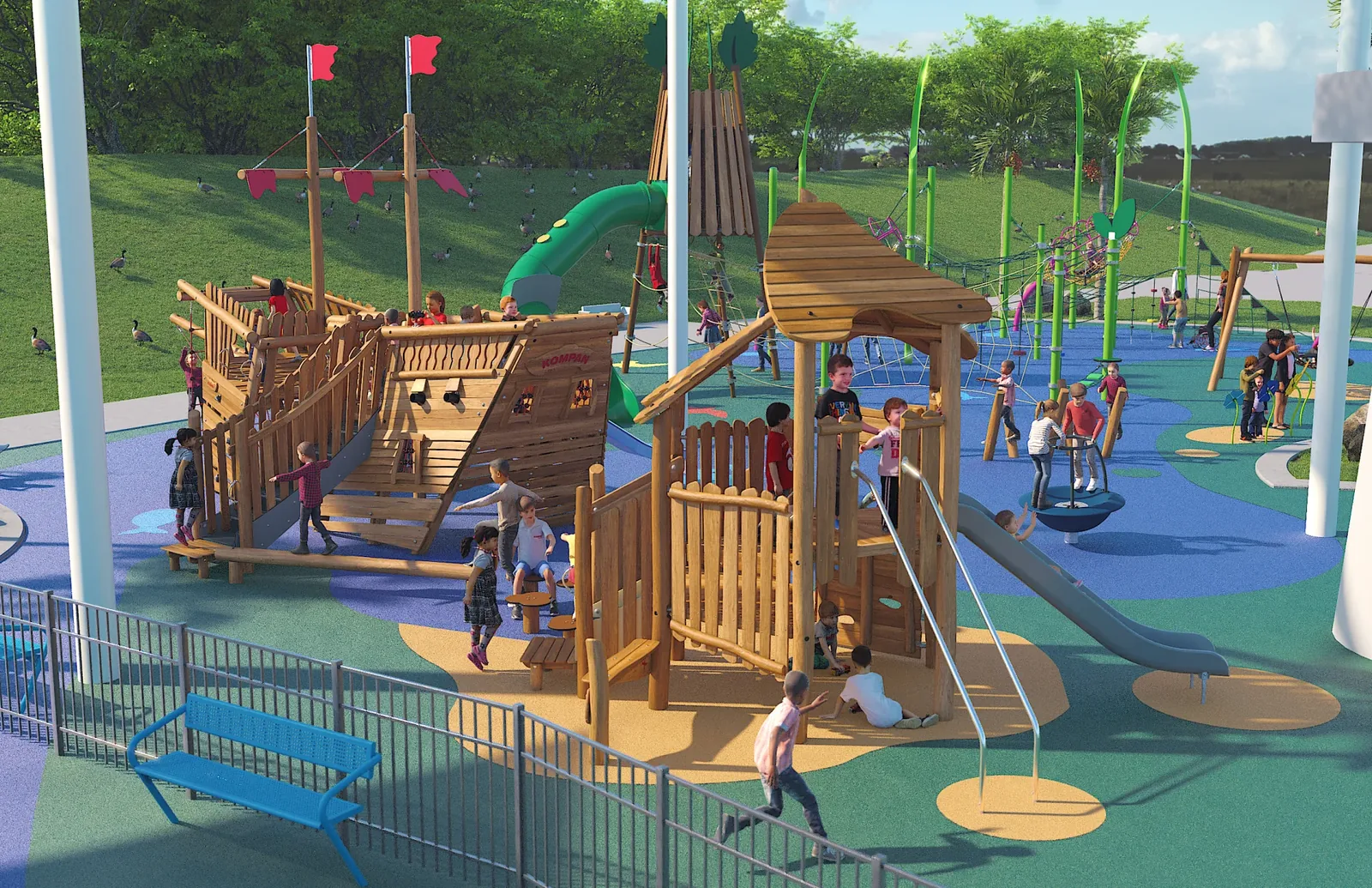
There are good neighborhood parks, playgrounds and sports facilities throughout the area, serious hiking on the Palos Verdes Peninsula, weekly farmers markets in several cities, botanical gardens, nature preserves, community events and plenty of places to simply get outside without heading toward the sand.
Some of these are destinations. Others are the kinds of places you start using because they happen to be five or ten minutes from home.
01
For real hiking, head up to Palos Verdes
The biggest change of scenery comes on the Palos Verdes Peninsula.
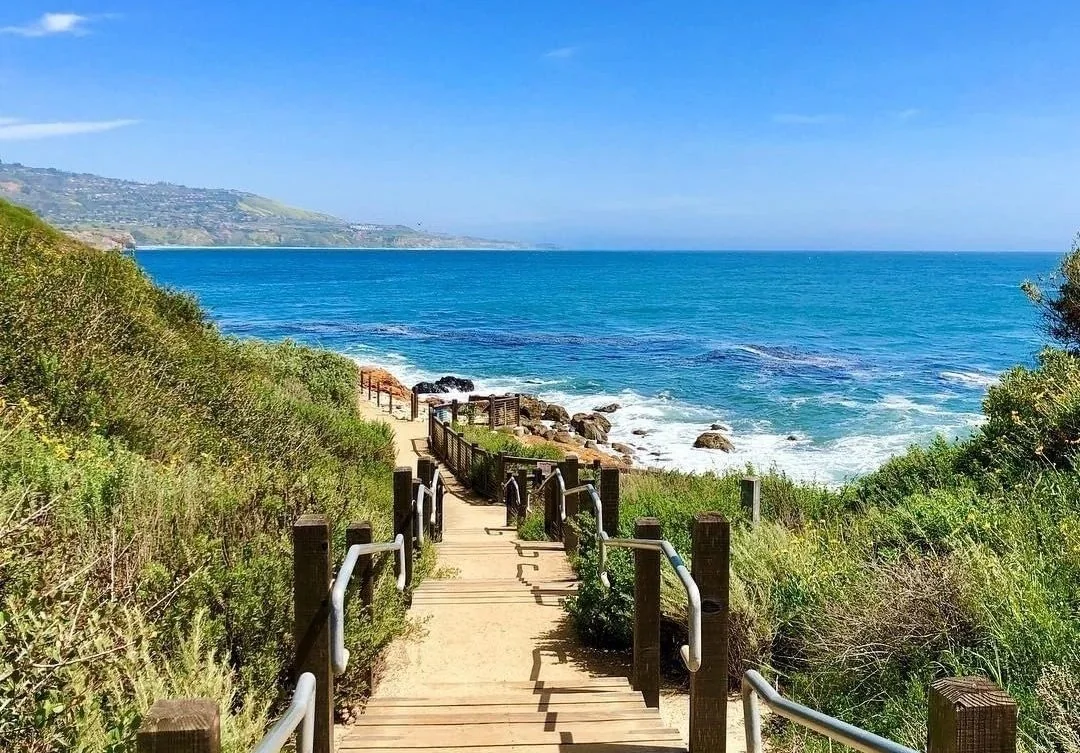
The Palos Verdes Nature Preserve covers roughly 1,500 acres, with public trails spread across a number of separate reserves. The terrain ranges from rolling hills and coastal bluffs to steeper canyons and ridgelines. Some routes are easy enough for a casual walk; others feel like an actual hike.
Forrestal, Alta Vicente, Ocean Trails, Vicente Bluffs and Portuguese Bend are among the names you will hear regularly. The views can be terrific, but the Peninsula is geologically active, so trail conditions and closures are worth checking before leaving home.
This is one of the things I think outsiders sometimes miss about the South Bay. You can spend the morning in a dense Los Angeles neighborhood and, not much later, be walking through coastal sage scrub with very little around you except hills and ocean views.
02
The local parks are more useful than glamorous
| Park | City | What you will find there |
|---|---|---|
| Polliwog Park | Manhattan Beach | 18 acres built around a pond — broad lawns, playground space, picnic areas, an amphitheater and fitness facilities; summer Concerts in the Park |
| Veterans Parkway | Manhattan Beach | A long, tree-lined walking and jogging route through residential Manhattan Beach toward Hermosa |
| Manhattan Heights Park | Manhattan Beach | Tennis, pickleball, basketball and other recreation |
| Valley Park | Hermosa Beach | 8.75 acres — playground, field, basketball court, picnic areas and amphitheater |
| South Park | Hermosa Beach | Playground, open space and a community garden |
| Hopkins Wilderness Park | Redondo Beach | An 11-acre natural preserve with wooded areas, meadows, ponds and trails |
| Wilson Park | Torrance | Sports courts and fields, a fitness path, playground, pickleball, roller hockey, an indoor sports center and a small live-steam railroad |
| Columbia Park | Torrance | 52 acres — soccer fields, walking paths, bocce courts, a community garden and open space |
For everyday recreation, the city parks probably matter more.
Polliwog Park in Manhattan Beach is the obvious example. It is 18 acres, built around a pond, with broad lawns, playground space, picnic areas, an amphitheater and fitness facilities. In summer, the amphitheater is also home to Manhattan Beach's long-running Concerts in the Park series.
Veterans Parkway offers something completely different: a long, tree-lined walking and jogging route through residential Manhattan Beach toward Hermosa. Across the city, Manhattan Heights Park adds tennis, pickleball, basketball and other recreation.
Hermosa Beach does not have the same amount of park acreage, but Valley Park is a substantial 8.75-acre green space with a playground, field, basketball court, picnic areas and amphitheater. South Park has another playground, open space and a community garden.
Redondo Beach has one of the more unexpected parks in the Beach Cities. Hopkins Wilderness Park is an 11-acre natural preserve with wooded areas, meadows, ponds and trails—a much quieter setting than most people expect to find within the city.
Torrance has considerably more room to work with. Wilson Park has sports courts and fields, a fitness path, playground, pickleball, roller hockey, an indoor sports center and even a small live-steam railroad. Columbia Park is larger still at 52 acres, with soccer fields, walking paths, bocce courts, a community garden and plenty of open space.
03
Farmers markets are part of the weekly routine
| Market | Day | Where it sets up |
|---|---|---|
| Manhattan Beach | Tuesday | The Civic Center, near downtown |
| Hermosa Beach | Friday | Valley Drive |
| Redondo Beach | Thursday | Veterans Park, near the pier |
| Riviera Village | Sunday | South Redondo Beach |
| Torrance | Tuesday and Saturday | Wilson Park |
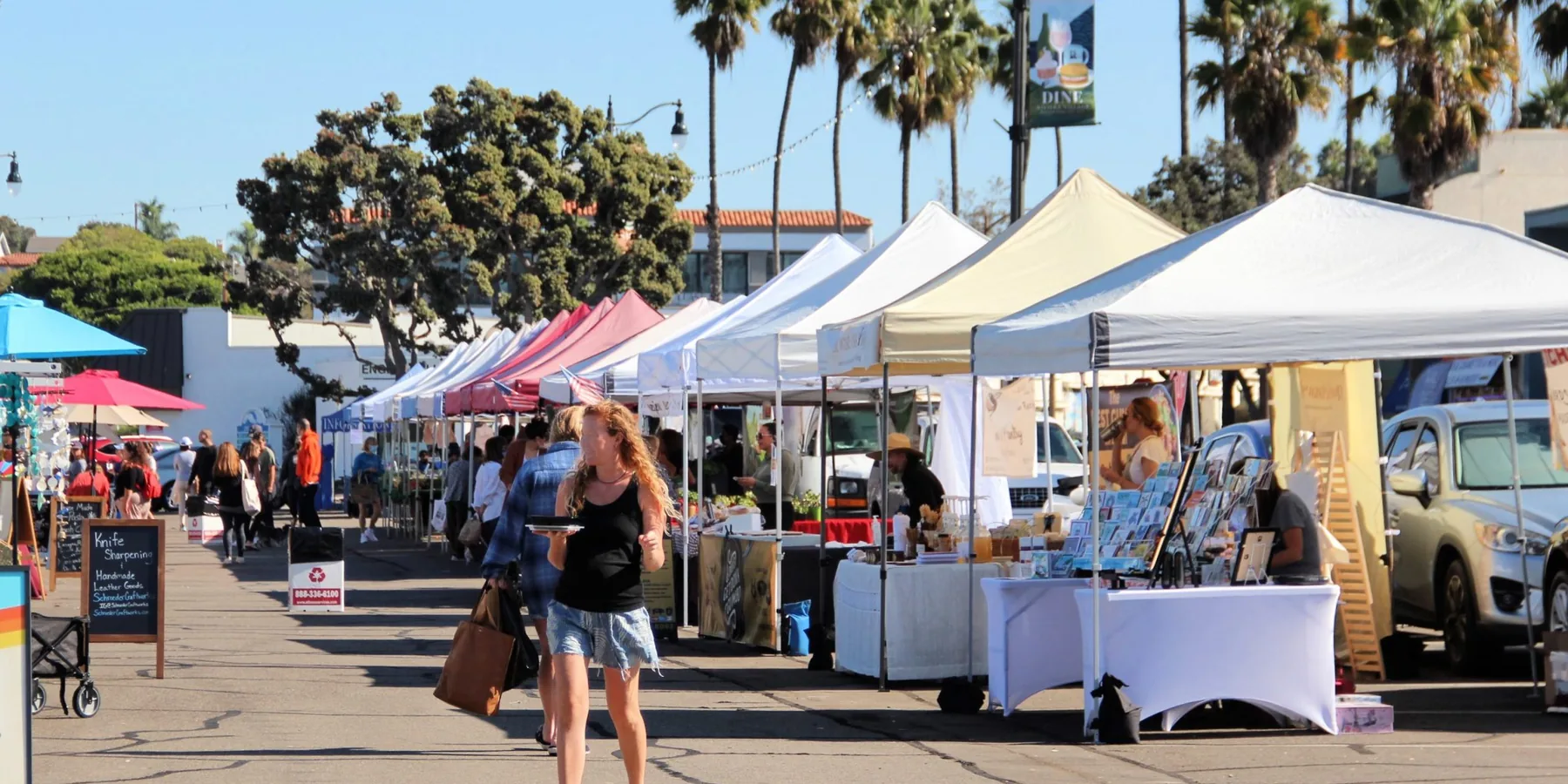
There is a farmers market somewhere in this part of the South Bay on several days of the week.
Manhattan Beach holds its market on Tuesdays at the Civic Center near downtown. Hermosa Beach's is Friday on Valley Drive. Redondo Beach has the Thursday market at Veterans Park near the pier and another on Sundays in Riviera Village. Torrance's much larger market at Wilson Park runs on Tuesdays and Saturdays.
They are all a little different. Torrance is the one to visit if you want a large selection and are actually shopping for the week. The smaller Beach Cities markets are easy to combine with whatever else you are doing nearby—lunch, downtown errands, the park or a walk.
For people who use them regularly, they simply become part of the week.
04
There are a few places you would never guess were here
Madrona Marsh in Torrance is one of them.
The preserve sits in the middle of the city but protects a rare seasonal wetland. There are walking trails, birding, docent-led nature walks and a nature center. It is a very different experience from either the beach or the Palos Verdes trails, and a good reminder that the South Bay still has pockets of native habitat tucked into some unlikely places.
South Coast Botanic Garden is another. The 87-acre garden sits on the Palos Verdes Peninsula and works equally well for a walk, an afternoon with children or simply spending a few hours outside somewhere green. In addition to the gardens themselves, it hosts changing exhibits and seasonal programs through the year.
Then there are dozens of smaller choices that rarely make anybody's relocation checklist: community gardens, tennis and pickleball courts, recreation classes, youth sports, senior programs, summer concerts, movie nights, playgrounds and neighborhood events.
You discover most of those after you get here.
05
And some weekends are built around the community rather than an activity
The South Bay cities put on a surprising number of local events during the year.
Summer concerts at Polliwog Park are one example. Hermosa Beach runs community movie nights and recreation programs for children, adults and older residents. Farmers markets themselves often become weekly gathering places rather than simply somewhere to shop. Holiday events, street festivals, local art programs and seasonal activities add another layer.
You certainly do not need to organize your life around a municipal events calendar. But it is useful to know those things exist, particularly if you are moving into the area without already having a network of friends or familiar places.
That is really the larger point of this section. Living near the ocean is a major part of the appeal of the South Bay, but it does not have to define every free hour. There are enough parks, trails, markets, sports, gardens and local activities that you can spend an entire weekend here without setting foot on the beach.
06
Dining districts
Where people go for dinner, coffee and an evening out
The South Bay has several compact commercial districts where you can have dinner, get coffee, meet friends, browse a few shops or just walk around for a while. Some sit right beside the beach. Others are farther inland and feel more like traditional neighborhood downtowns.
People move between them all the time. You do not have to live in Manhattan Beach to go there for dinner, or in Redondo Beach to spend Sunday morning in Riviera Village.
| District | City | Anchored on | What sets it apart |
|---|---|---|---|
| Downtown Manhattan Beach | Manhattan Beach | Manhattan Beach Boulevard and Manhattan Avenue, above the pier | More than 50 restaurants, cafés and coffee shops in a small area, plus Metlox Plaza |
| Pier Avenue & Pier Plaza | Hermosa Beach | Pier Avenue running downhill to a pedestrian-only plaza | Restaurants and bars right at the edge of The Strand, and more nightlife than the other downtowns |
| Riviera Village | Redondo Beach | Several blocks around South Catalina Avenue | Everyday services mixed in with the dining; no pier at its center, and a Sunday farmers market |
| Downtown El Segundo | El Segundo | Main Street, Grand Avenue and Richmond Street, west of PCH | Older buildings and a traditional town-center feel, separate from the office districts east of PCH |
| Old Torrance | Torrance | The historic downtown from the city’s early development | Japanese, Korean, Mexican, Indian, Brazilian and Thai restaurants within a relatively small area |
01
Downtown Manhattan Beach
Downtown Manhattan Beach sits immediately above the pier, centered around Manhattan Beach Boulevard and Manhattan Avenue. It is compact enough to walk easily, with restaurants, coffee shops, bars, boutiques and services packed into a relatively small area.
There are more than 50 restaurants, cafés and coffee shops downtown, along with a large collection of independent stores and familiar retail names. Metlox Plaza adds another place to sit, eat or meet someone without going all the way down to the beach.
One of the pleasures of downtown is how easily dinner can turn into a walk to the pier, or coffee into a few minutes looking out at the ocean. It is also popular, so weekends and warm evenings can be busy.
02
Hermosa Beach: Pier Avenue and Pier Plaza
Hermosa's downtown feels more casual and more directly tied to the beach.
Businesses line Hermosa Avenue and Pier Avenue, with Pier Avenue running downhill until it opens onto the pedestrian-only Pier Plaza. Restaurants and bars spill right up to the edge of The Strand, and the pier begins on the other side.
During the day, it works for coffee, lunch, errands or sitting outside. At night, there is more bar and live-entertainment activity than you find in most of the other South Bay downtowns. The area has a long music history as well, and that is still part of Hermosa's identity.
03
Riviera Village
Riviera Village in South Redondo Beach has a different feel again.
The district covers several blocks around South Catalina Avenue, with restaurants, cafés, bars, boutiques, fitness studios, salons, markets and everyday services mixed together. The beach is close, but the Village does not revolve around a pier the way downtown Manhattan Beach and Hermosa do.
It works just as well for brunch or dinner as it does for picking something up, getting coffee or walking around on a Sunday morning. The weekly Sunday farmers market fits naturally into that routine.
04
Downtown El Segundo
Downtown El Segundo is worth knowing because it does not feel like an extension of the Beach Cities.
The older downtown sits west of Pacific Coast Highway around Main Street, Grand Avenue and Richmond Street. There are locally owned restaurants, coffee shops, breweries, bars and small businesses, along with older buildings that give the area more of a traditional town-center feel.
It is easy to miss if your experience of El Segundo is limited to the office districts, hotels and larger commercial centers east of Pacific Coast Highway. The downtown is much smaller in scale and much more walkable.
05
Old Torrance
Old Torrance is another place that can surprise people who know Torrance mainly from Del Amo Fashion Center and the large commercial corridors.
The historic downtown has shops, restaurants, breweries and regular community events among buildings that date back to the city's early development. The restaurant mix is broad, including Japanese, Korean, Mexican, Indian, Brazilian, Thai and other cuisines within a relatively small area.
It is not a beach town setting at all. It feels more like an older Southern California downtown that has gradually filled in with restaurants and independent businesses.
06
You will probably use more than one of them
These districts are close enough that people rarely treat city boundaries as a reason to stay put.
You may prefer Manhattan Beach for one kind of dinner, Hermosa when you want more activity afterward, Riviera Village for a slower afternoon, or Downtown El Segundo and Old Torrance when you want something away from the beach.
After a while, you’ll build your own list of favorite places and activities across the LA South Bay community.
Buyer questions
Questions buyers should ask about everyday life in the South Bay
The lifestyle question is usually more specific than “How close is it?” Two homes can be the same distance from the beach, a downtown or a park and work very differently in everyday life.
If I pay more to live close to the beach, how much am I likely to actually use it?
That depends less on the number of blocks than on how easy it is to get there from the specific property.
A home with a simple walk or bike route can make the beach part of an ordinary morning or evening. A home that requires a steep climb, a major street crossing, difficult parking or carrying boards and other gear a long distance may feel less convenient even if the map says it is close.
What is there to do regularly if the beach is not my main interest?
Quite a lot.
There are neighborhood parks, sports facilities, farmers markets, hiking trails, botanical gardens, recreation classes, community events, walking routes and several walkable dining districts throughout the South Bay.
The sections above cover many of the specific places. For a buyer, the more useful question is which of them are convenient from the neighborhoods and homes being considered.
Do people generally stay within their own South Bay city for recreation and dining?
No. City boundaries matter much less in everyday life than they do on a map.
Someone may live in Torrance and have dinner in Riviera Village, live in Manhattan Beach and sail from Marina del Rey or King Harbor, or live in Redondo and hike on the Palos Verdes Peninsula.
After a while, these places tend to become part of the same mental map rather than separate city-by-city destinations.
How can I tell whether a particular home really has convenient walking or biking access to the beach and The Strand?
Walk or bike the route yourself.
Look at the grade, major intersections, traffic, where the pedestrian and bicycle paths connect, and whether the route still feels practical when you are carrying something or coming home uphill.
Straight-line distance does not tell you any of that.
How much do hills and major streets affect everyday walkability?
Quite a bit.
A few level blocks on neighborhood streets can feel completely different from the same distance if the route crosses Sepulveda Boulevard in Manhattan Beach, Pacific Coast Highway in Hermosa Beach, or involves the steeper streets of the Manhattan Beach Hill Section.
You notice that difference even more with a stroller, bicycle, surfboard, groceries or anything else you have to carry.
When comparing homes, I would pay as much attention to the actual route and elevation as I would to the mileage.
Is living near The Strand the same thing as being able to live without a car?
Not necessarily.
The Strand and the walkable downtowns can make recreation, dining and short local trips very easy. Work, groceries, schools, medical appointments and destinations outside the immediate area may still require a car.
A neighborhood can be very walkable for leisure without making every part of daily life convenient without a car.
What should buyers know about beach parking and parking for guests?
Parking becomes more complicated closer to the busiest parts of the coast, particularly on warm weekends and during events.
The practical questions are property-specific: garage and driveway space, street restrictions, permit rules, nearby public parking and where guests are realistically going to park.
If easy beach access is important to you, parking should be part of the same conversation as distance.
How should I evaluate recreation programs, camps and activities before choosing a home?
Check the actual programs rather than assuming every city offers the same choices.
Manhattan Beach Parks & Recreation, Torrance Community Services and Redondo Beach Community Services each operate their own programs and facilities. Other cities do the same, while private sports leagues, sailing organizations, camps and activity providers add still more options.
Registration dates, residency priority, nonresident fees, age requirements, waitlists and availability can vary.
If a particular activity matters to your household, verify the program before making it part of your location decision.
What options are there for meeting people and building a social life besides bars and nightlife?
A lot of South Bay social life happens around activities people do repeatedly.
Sports leagues, sailing, volleyball, fitness groups, classes, farmers markets, volunteer organizations, recreation programs and community events all create opportunities to see the same people regularly.
That can be particularly useful after moving into the area without an established local network.
What lifestyle details should I check at the neighborhood or property level?
Start with the routes you expect to use.
Walk to the beach, downtown, park or other places that matter to you. Check the hills, major street crossings, traffic, parking, bike storage, noise, guest access and how long ordinary errands really take.
Also verify anything that can change over time—trail closures, recreation-program availability, permit rules and seasonal schedules—rather than relying on an old map or a general description of the city.
A city can tell you what is nearby. The individual property determines how practical it is to use.
Your next move
Make Your LA South Bay Move With Confidence
Call or email Steve to compare neighborhoods, understand the tradeoffs, and identify the homes that best fit your priorities and budget.