Torrance
What Is It Like to Live in Torrance?
Torrance is really several different housing searches.
Torrance is too large and too varied to evaluate as a single housing market. The part of the city you choose can change how close you are to the coast, how long it takes to reach a freeway, what the surrounding housing looks like, and which other South Bay communities make sense as alternatives.
A buyer looking near Hollywood Riviera or South Torrance may be comparing homes with Redondo Beach. Someone considering West Torrance may be weighing a similar choice farther inland. Old Torrance offers a very different setting around its historic downtown, while Central and North Torrance bring their own mix of established neighborhoods, shopping, employment access and older housing stock.
That is why citywide averages are especially unhelpful here. Two Torrance homes at similar prices can offer very different combinations of lot, yard, garage, school assignment, coastal access and commute. I would start by deciding which parts of Torrance fit the way you want to live, then compare properties within those areas.
The sections below break Torrance into the major residential areas a buyer is most likely to encounter and explain what changes from one part of the city to another.
Hollywood Riviera: the coastal end of Torrance
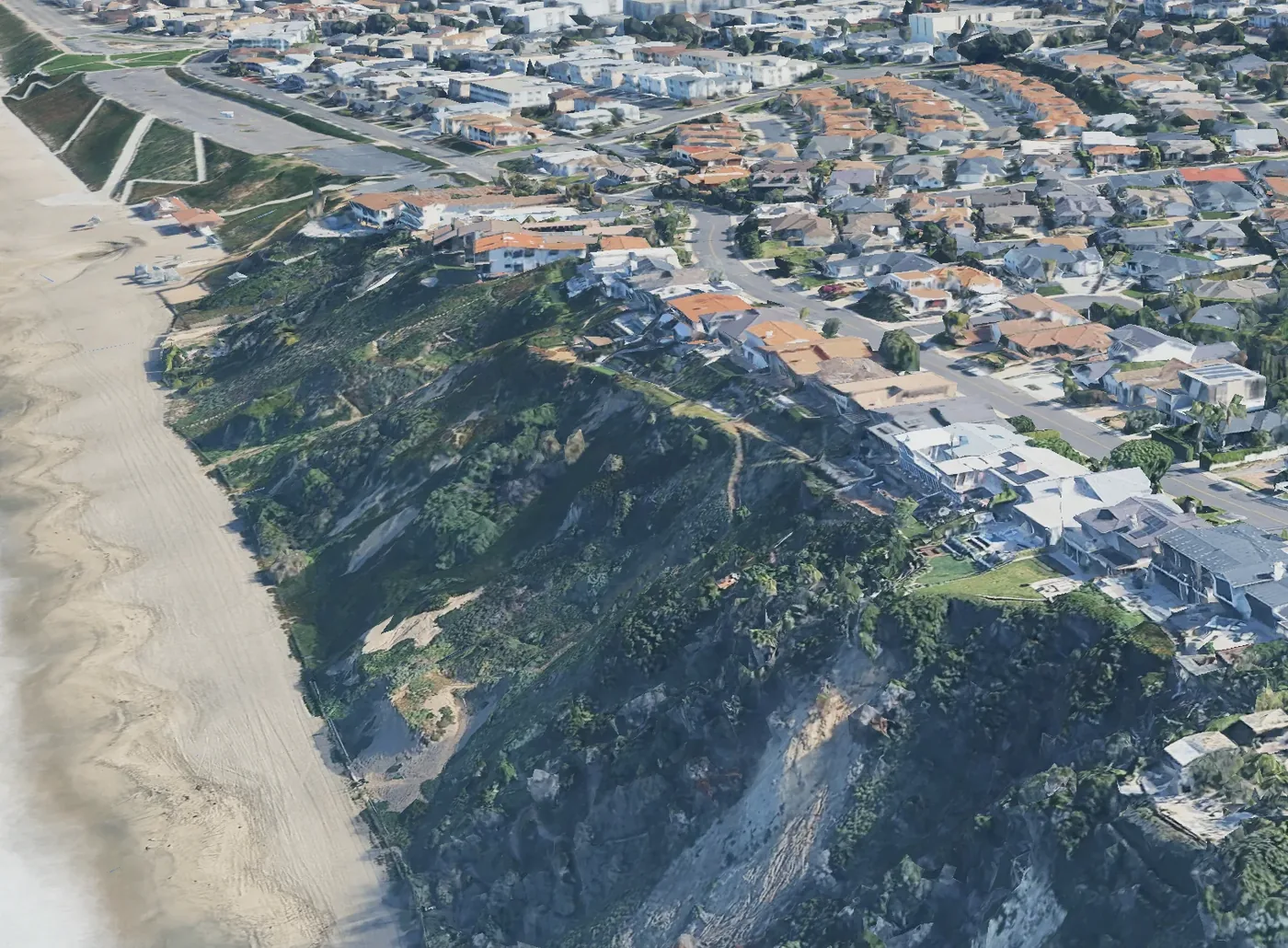
Hollywood Riviera feels less like central Torrance than almost any other part of the city. It sits against the Palos Verdes Peninsula above Torrance Beach, with Riviera Village and South Redondo immediately nearby. Depending on the street and elevation, the setting can include ocean views, hillside streets and much easier access to the coast than buyers may associate with Torrance generally.
The housing is largely established detached homes rather than newer development, and the terrain makes the individual property especially important. A few blocks can change the view, grade, driveway, yard usability and relationship to neighboring homes. Some properties have broad coastal outlooks; others sit in attractive residential streets without meaningful ocean views at all.
For buyers who want to remain close to the beach but are willing to give up the walkable Strand environment of Manhattan or Hermosa, Hollywood Riviera can compete directly with parts of South Redondo. Riviera Village, Torrance Beach and the Palos Verdes Peninsula are all close, while the neighborhood still offers the residential feel buyers often associate with Torrance.
The tradeoff is geography in the other direction. This is one of the parts of Torrance where being close to the coast can mean being farther from the freeway system. If a daily commute depends on the 405 or 110, I would pay as much attention to the surface-street portion of the trip as to the freeway miles themselves.
There is also an address issue here that deserves its own explanation later on the page: a Redondo Beach mailing address does not necessarily mean a Hollywood Riviera property is in the City of Redondo Beach or served by Redondo Beach schools. That needs to be verified for the specific property rather than inferred from the postal address.
South Torrance, Walteria and Seaside: established neighborhoods with a coastal orientation
South Torrance covers several residential areas that buyers often encounter when they begin looking just inland from Redondo Beach and the Palos Verdes Peninsula. Much of the housing is established rather than new, with detached homes, garages, yards and postwar residential streets forming a large part of the landscape.
Within that broader area, Walteria and Seaside have their own identities. Walteria sits closer to Pacific Coast Highway and the shopping and services along that corridor, with a mix of older detached homes and denser housing in some pockets. Seaside is more residential in character and sits closer to the Redondo Beach side of Torrance, making it a natural comparison for buyers who like South Redondo but want to see what the same general part of the South Bay offers a little farther inland.
The differences are not dramatic enough that I would treat every smaller neighborhood as a completely separate housing market. What matters more is the individual street, lot and property. A well-kept single-story house with a usable yard and garage can feel very different from a nearby property on a busier street or one where later additions have changed the original layout.
For buyers comparing this part of Torrance with Redondo Beach, the tradeoff is often less about distance than about how they want to use the location. The beach, Riviera Village and the Palos Verdes Peninsula can all remain relatively close, while the home itself may offer more of the traditional detached-house features a buyer is looking for.
This is also an area where I would pay attention to daily driving patterns. Being several miles inland from the beach does not necessarily mean quick freeway access, and the surface-street portion of a commute can matter more than a map first suggests.
West Torrance: close to the Beach Cities without living in one
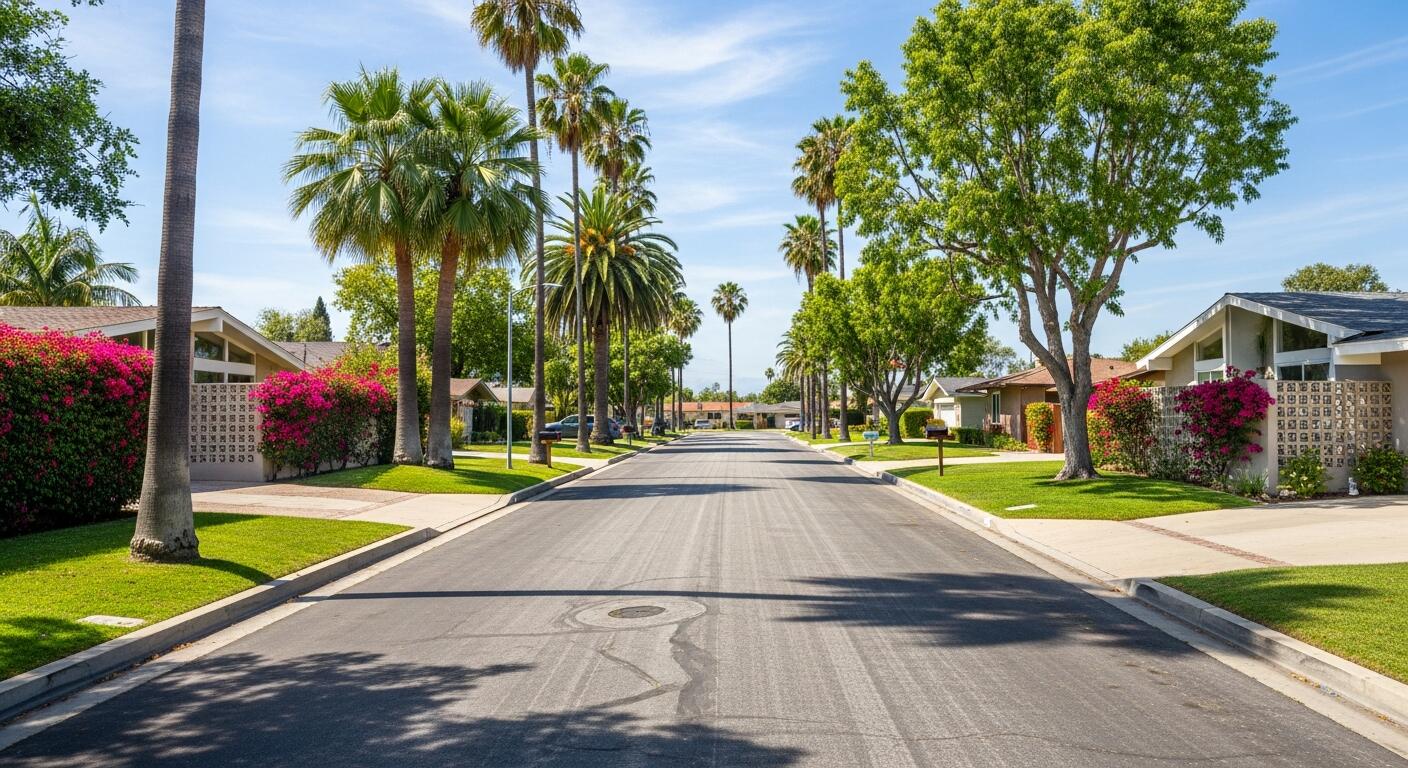
West Torrance appeals to buyers who want to stay connected to the coastal South Bay without making the beach itself the center of daily life. Redondo Beach is immediately to the west, the coast is still easy to reach, and many of the neighborhoods have the quiet, established residential feel people associate with the western side of the South Bay.
One of its strongest advantages is location. You can be close to Redondo Beach, shopping in Torrance, major South Bay employers, and the 405 without living directly in the denser coastal environment. For someone whose routine includes El Segundo, LAX, Torrance, or the Westside, that geography can make West Torrance particularly practical.
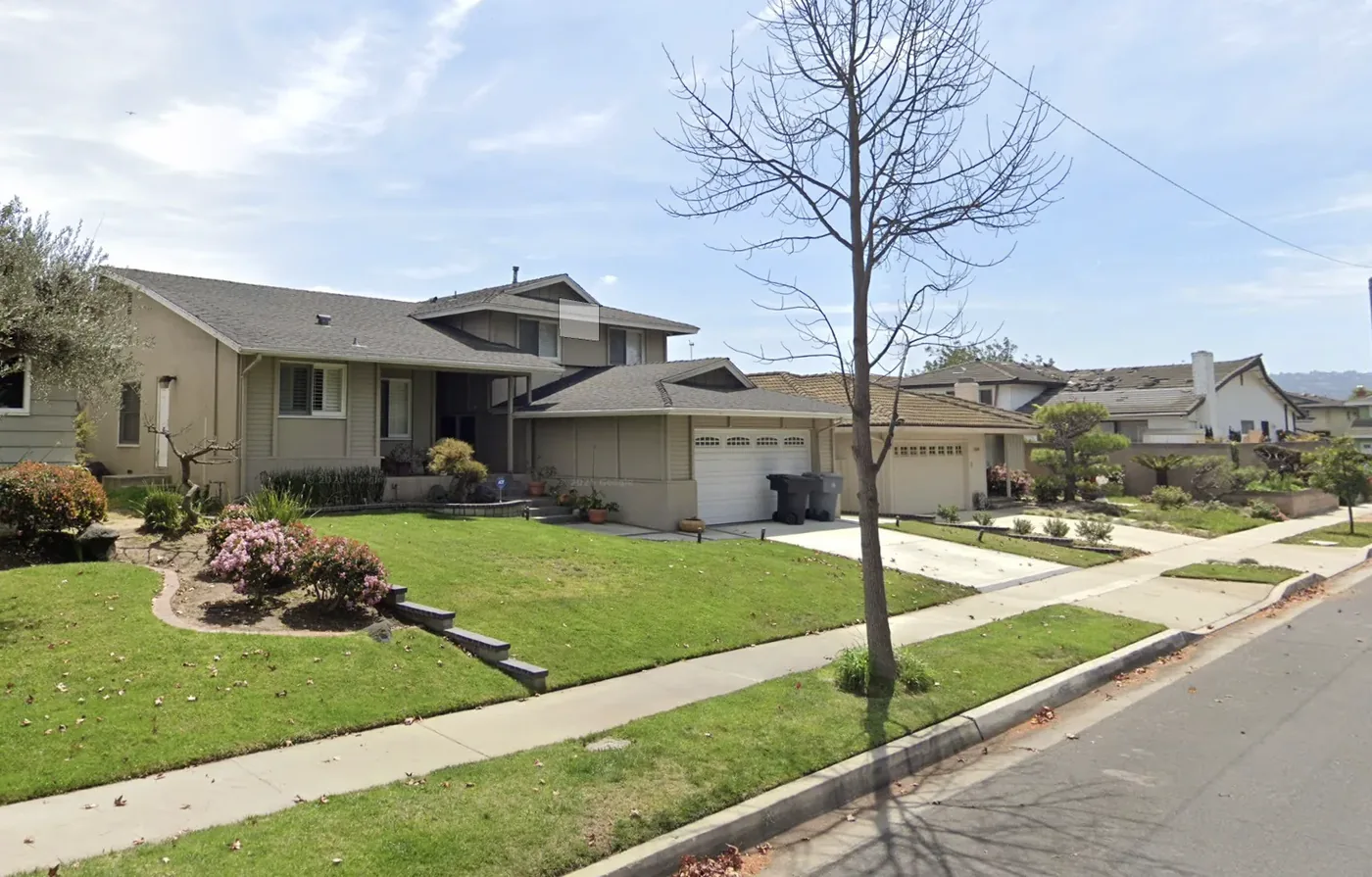
The housing is predominantly older, established single-family stock. You will commonly see one-story postwar ranch and bungalow-style homes, many dating from the 1940s through the 1960s, along with homes that have been expanded, remodeled, or replaced over time. Two-story additions and newer rebuilds are mixed into the original streets, while condos, townhomes and apartments appear more often along larger corridors. The result is not architecturally dramatic, but it is familiar Southern California suburban housing on generally flat, residential streets.
The neighborhoods themselves are largely residential rather than destination-oriented. There is no equivalent of Downtown Manhattan Beach or Riviera Village at the center of daily life, and for some buyers that is part of the appeal. Streets can feel calmer and more suburban, while restaurants, shopping and the beach remain nearby rather than far away.
West Torrance is also one of the easiest places to compare directly with North Redondo. The two areas sit next to each other and can feel surprisingly similar in parts, so the decision often comes down to whether a buyer prefers the Torrance setting and school system or the Redondo Beach address and closer connection to the coast.
For someone who likes the western South Bay but does not need to live in a Beach City, West Torrance can be one of the most straightforward alternatives to consider.
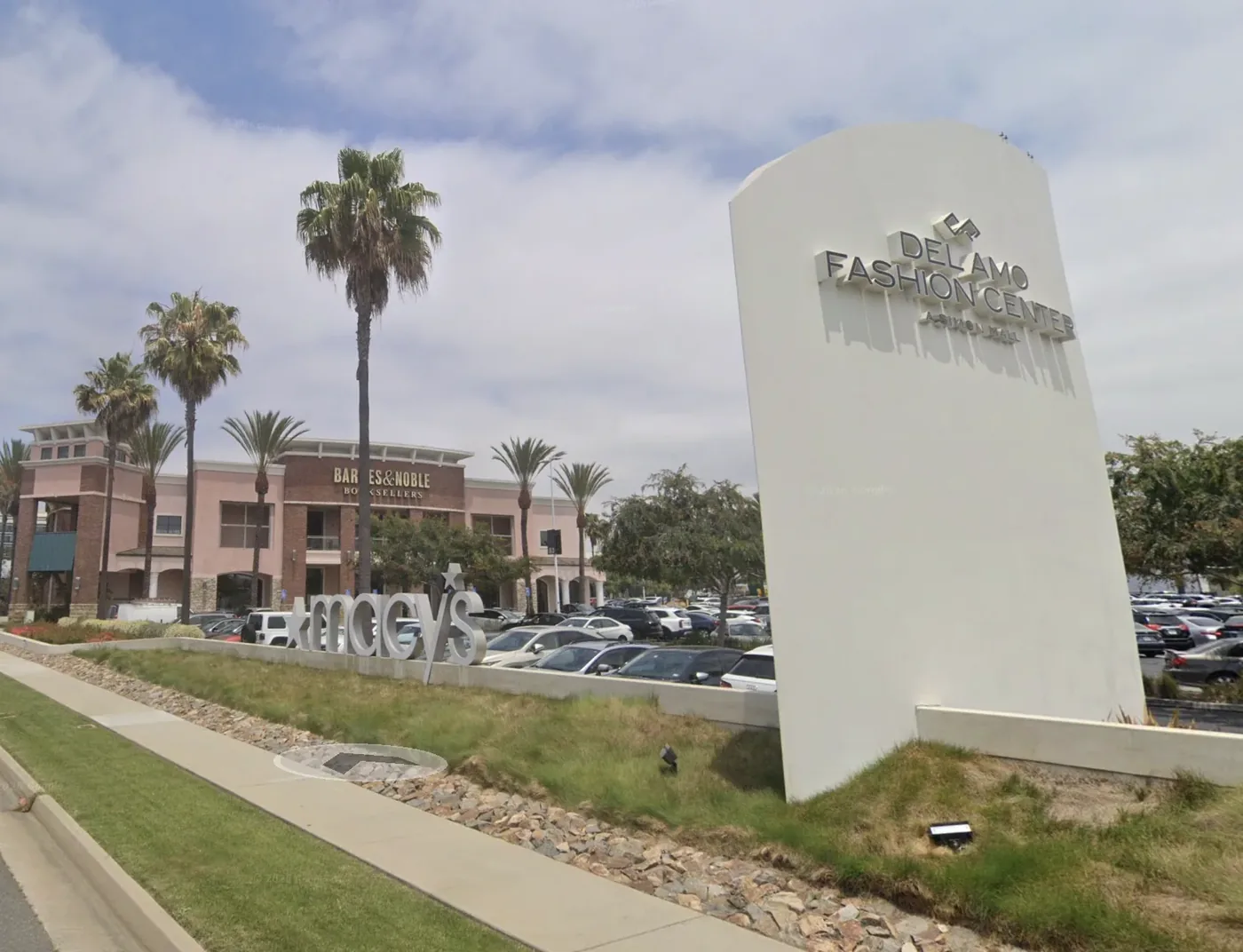
Central Torrance / Del Amo: convenience is the main attraction
Central Torrance is a good fit for buyers who care less about being close to the beach and more about having a large amount of everyday life close at hand. The Del Amo area is one of the South Bay’s major shopping and dining centers, and this part of Torrance sits near a broad mix of retail, restaurants, medical services, parks and employment.
That makes the lifestyle different from West or South Torrance. You are more firmly inland and the coast is less connected to the neighborhood itself, but errands and services can be remarkably convenient. For someone who spends more time moving around Torrance and the broader South Bay than going to the beach, that can be a worthwhile trade.
Housing around Central Torrance is varied. Established neighborhoods contain many mid-century detached homes—typically one- and two-story ranch, traditional and later remodeled houses—while condos, townhomes and apartments become more common closer to Del Amo and the larger commercial streets. Buyers can therefore search here for a conventional suburban house or for lower-maintenance attached housing without leaving the same general part of the city.
The biggest reason not to choose Central Torrance is also fairly straightforward: it does not have the coastal character of Hollywood Riviera, South Torrance or the western edge of the city. Major commercial roads and the Del Amo retail district also bring more traffic and activity than buyers will find on quieter residential streets farther from the center.
For someone who wants a practical, centrally located South Bay home with extensive shopping and services nearby—and who does not need the beach to define where they live—Central Torrance can make a lot of sense.
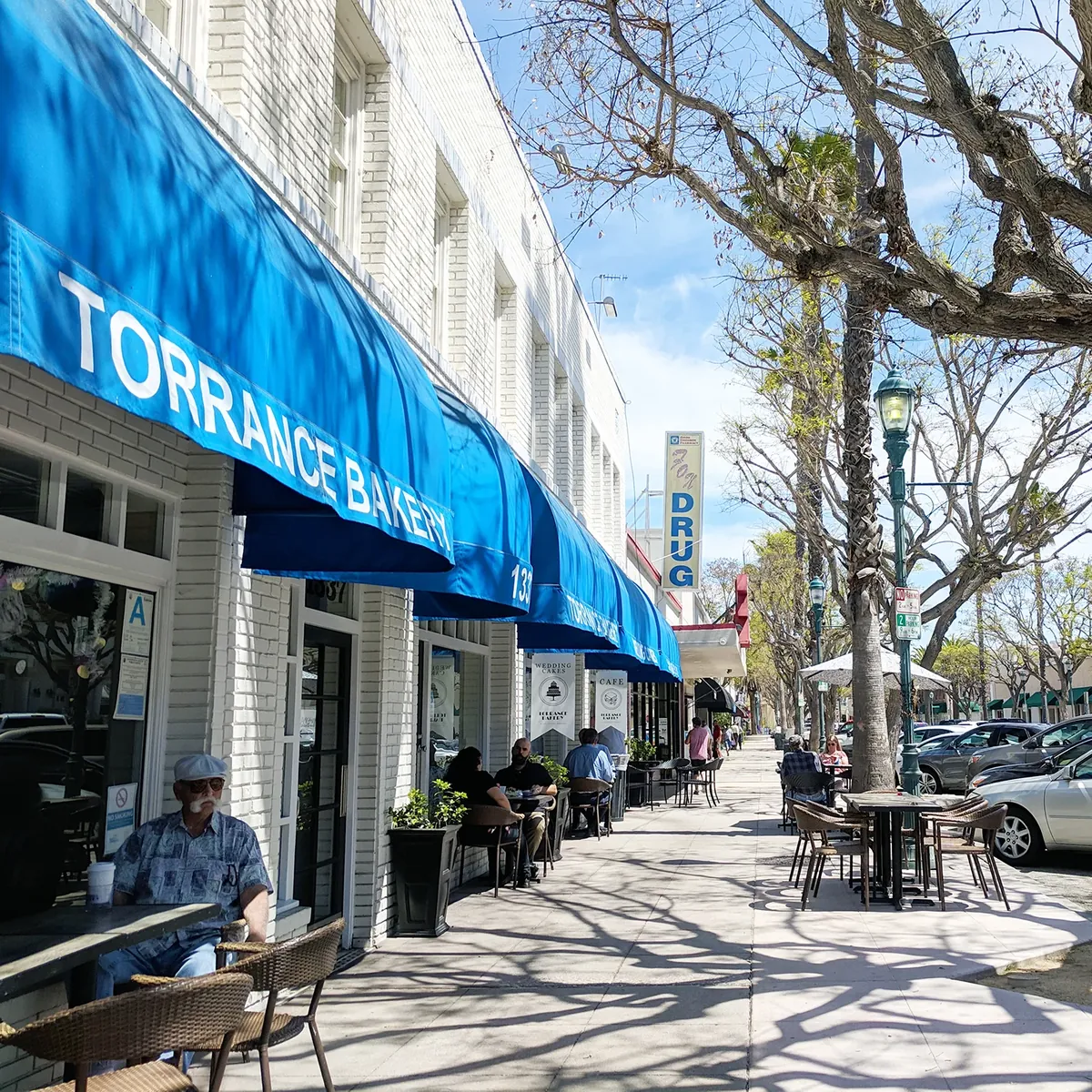
Old Torrance: the part of Torrance with the most visible history
Old Torrance offers something the newer postwar parts of the city generally do not: a recognizable neighborhood center and a housing stock that reflects the city’s earlier history. Downtown Torrance has older storefronts, restaurants and local businesses within a traditional street grid, with residential blocks extending around it. For buyers who find conventional suburban Torrance a little anonymous, this is one of the places where the neighborhood itself can have more personality.
The housing is also noticeably different. Along with later postwar homes, buyers can encounter 1920s and 1930s bungalows, Craftsman-influenced houses, Spanish-style homes, cottages and other smaller prewar properties, mixed with duplexes, small multifamily buildings and newer infill. Homes are not uniformly large, and some buyers will prefer the newer housing found elsewhere in Torrance, but Old Torrance offers architectural variety that is harder to find in the city’s large tracts of mid-century development.
Living here can also mean being able to use Downtown Torrance as an actual neighborhood amenity rather than driving to a regional shopping center for everything. It is not a beach-town downtown, but having restaurants, shops and community activity nearby gives this part of Torrance a different rhythm from purely residential neighborhoods.
The reasons not to choose it are equally distinct. The housing is older, the surroundings can feel more urban and mixed-use, and portions of the broader area sit closer to commercial, industrial and rail activity than the quieter residential sections of West or South Torrance. Buyers looking primarily for a polished suburban neighborhood or proximity to the coast may prefer another part of the city.
For someone who values older architecture, neighborhood character and a real historic downtown more than proximity to the beach, Old Torrance can be one of the most interesting parts of the city.
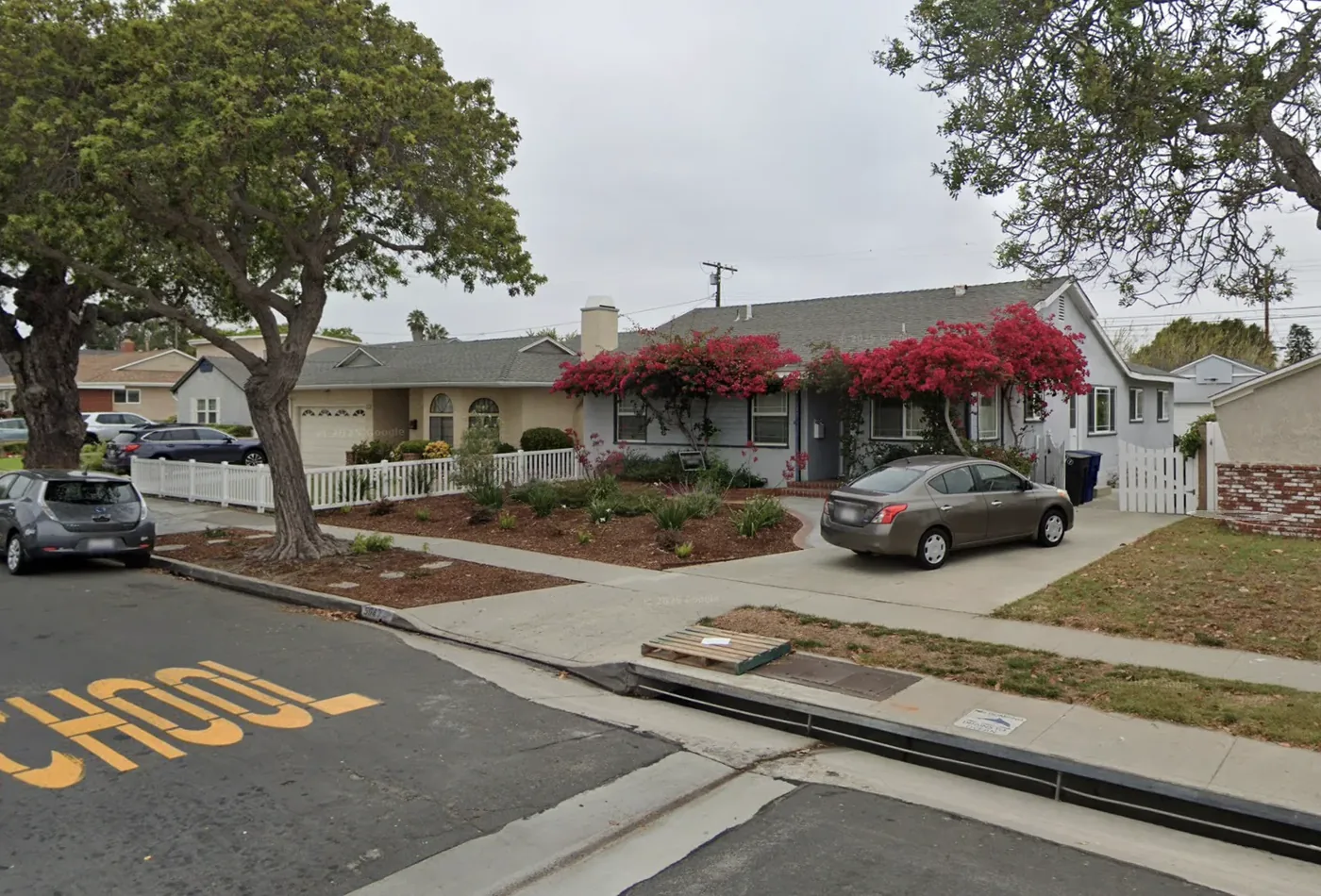
North Torrance: a more inland, practical version of Torrance
North Torrance makes the most sense for buyers who want the advantages of living in Torrance but do not place much value on being close to the coast. Its location puts more emphasis on access to the 405, South Bay employment centers and neighboring areas such as Gardena and Hawthorne than on beach proximity. For buyers whose daily routine points north or east rather than toward the ocean, that geography can be a meaningful advantage.
The housing is predominantly established postwar single-family construction. Single-story ranch houses and modest bungalow-style homes from roughly the 1940s through the 1960s are common, mixed with later additions, remodeled homes and occasional newer construction. There are also townhomes, condos, apartments and multifamily properties, particularly around the larger streets, but much of the residential interior still has the look of a traditional mid-century Southern California subdivision.
For some buyers, the attraction is simply that North Torrance feels residential and straightforward. It is less oriented toward tourism, nightlife or a downtown district, and daily life is more likely to revolve around neighborhood schools, parks, local shopping and driving to destinations elsewhere in the South Bay. That can suit someone looking for a conventional suburban setting rather than a neighborhood with a strong destination identity.
The tradeoff is that the beach becomes something you drive to rather than something that shapes the neighborhood. North Torrance also lacks the coastal scenery of Hollywood Riviera, the proximity to Redondo of West Torrance, and the historic character of Old Torrance. Buyers who want those things will probably find another part of the city more compelling.
But for someone whose priorities are Torrance schools, an established residential neighborhood, access to the broader South Bay and a location that is less dependent on coastal geography, North Torrance can be a very sensible place to look.
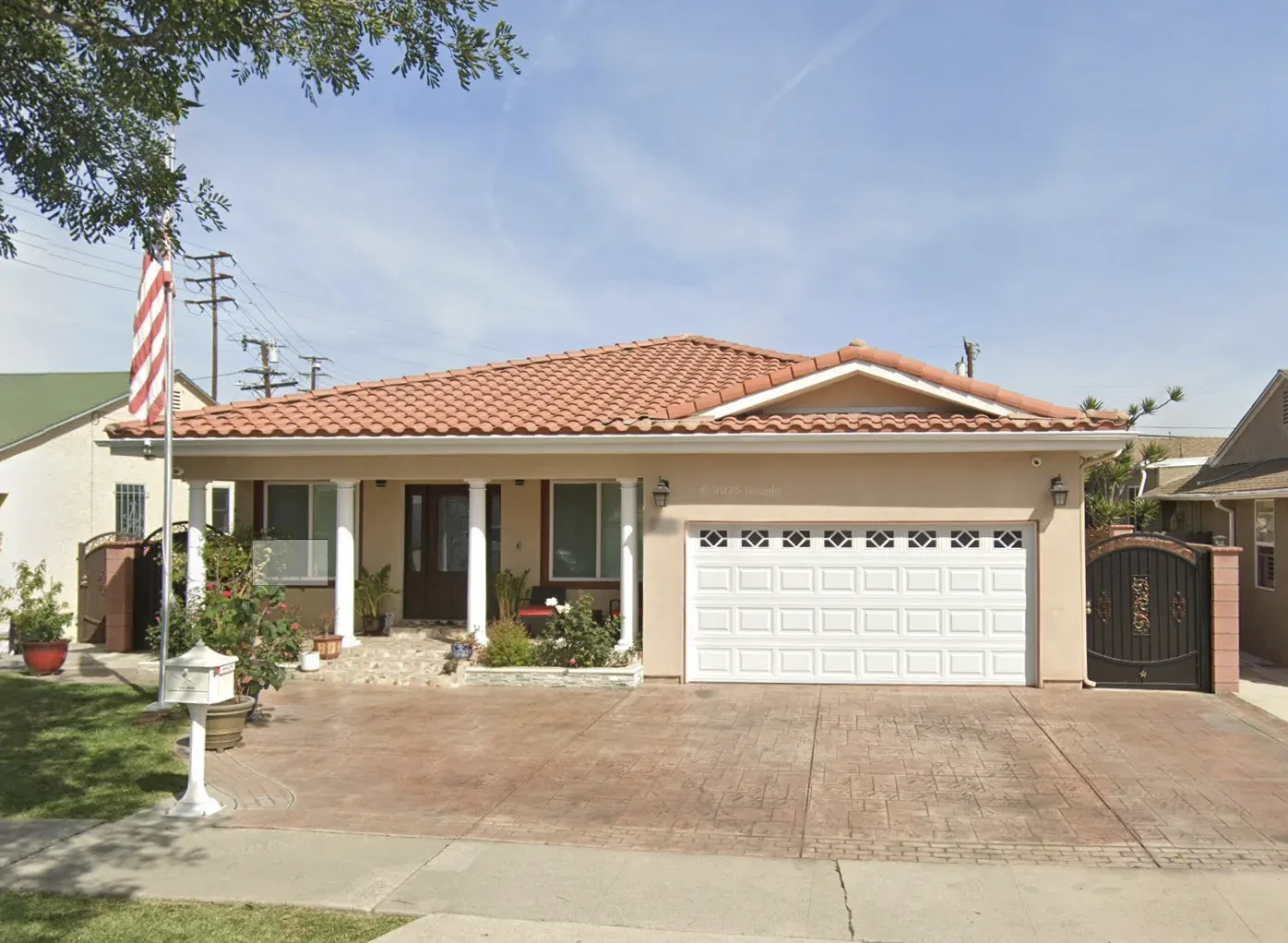
A Torrance mailing address does not always mean City of Torrance
One of the most confusing things about shopping for a home in Torrance is that “Torrance” on the mailing address does not necessarily tell you which city, school district or local government actually serves the property.
Some properties with Torrance mailing addresses are outside the City of Torrance altogether. The City specifically identifies areas such as West Carson and Harbor Gateway where properties may use a Torrance postal address because they are served by the Torrance Post Office even though they are not within Torrance city limits.
The opposite can happen near Hollywood Riviera. A home can have a Redondo Beach mailing address while actually being within the City of Torrance, which is one reason the Riviera can be particularly confusing when buyers first look at listings.
This matters for more than what appears on an envelope. City jurisdiction can affect municipal services, permitting and other local-government issues, while school eligibility depends on the school-district boundary rather than the postal city printed in the address. Torrance Unified requires a valid address within its attendance area for resident enrollment; families outside the district need an approved permit. TUSD also provides an address-based School Locator for determining the assigned schools.
So when I see “Torrance” or “Redondo Beach” in a listing, I would not use that label alone to decide what the property actually belongs to. The municipal jurisdiction and school assignment need to be established from the specific address.
Torrance schools: one reason buyers draw the city boundary carefully
For buyers with school-age children, Torrance Unified can be an important reason to consider Torrance rather than a nearby community with a Torrance mailing address. TUSD is a unified K–12 district serving the City of Torrance, with 17 elementary schools, eight middle schools and four comprehensive high schools: North, South, Torrance and West.
That citywide system also helps explain why the different parts of Torrance can appeal to families without there being one single “best school area.” Hollywood Riviera and South Torrance feed into a different set of neighborhood schools than West, Central or North Torrance, and the four high schools are distributed across different parts of the city. For a buyer, the useful question is therefore not simply “Are Torrance schools good?” but which Torrance schools serve the neighborhood and home I am considering?
Students ordinarily attend the school assigned to their residence. TUSD provides a School Locator for checking the assigned school by address. District residents can apply through an Open Enrollment lottery to attend a different TUSD school, but space is not guaranteed. Families living outside TUSD boundaries can apply for an inter-district permit, but approval is also not guaranteed.
That distinction matters when comparing Torrance with nearby Redondo Beach, Lawndale, Hawthorne or an unincorporated area carrying a Torrance postal address. Living near a Torrance school is not the same thing as being assigned to it, and I would not treat an expected transfer or permit as equivalent to purchasing within the school’s attendance area.
For buyers who place meaningful weight on public schools, the practical advantage of Torrance is that there are multiple established residential areas within the same unified district, allowing the housing search to range from the coastal end of the city to West, Central, Old or North Torrance without automatically leaving TUSD.
In Torrance, where you live can change the commute considerably
Torrance looks fairly compact on a regional map, but commuting from one side of the city can feel very different from commuting from another. The reason is simple: freeway access is concentrated toward the northern and eastern sides of the city, while many of the neighborhoods closest to the coast require a longer surface-street drive before reaching the freeway system.
For buyers commuting toward El Segundo, LAX or the Westside, North and West Torrance can be particularly practical because of their relationship to the 405 and the employment corridor running north through Hawthorne and El Segundo. Central Torrance can also work well for someone whose daily destinations are spread around the South Bay rather than concentrated in one direction.
For trips toward Downtown Los Angeles, the Harbor Area or points east, access to the 110 becomes more important. Old Torrance and the eastern side of the city are better positioned for that direction than Hollywood Riviera or the neighborhoods along the western and southern edges.
The coastal end of Torrance presents the opposite tradeoff. Hollywood Riviera and parts of South Torrance put you much closer to Torrance Beach, South Redondo and the Palos Verdes Peninsula, but farther from the freeway network. Someone working from home or commuting locally may barely care. Someone making a five-day-a-week freeway commute may care a great deal.
That is why I would treat commute geography as part of choosing a Torrance neighborhood rather than as an afterthought. A buyer can choose coastal access, freeway access, or a more central position between the two, and the best answer depends heavily on where daily life actually takes them.
Buying in Torrance with someone who knows the South Bay
Torrance gives buyers a lot of choices, but finding a home is only part of the job. Once the right property comes along, you still need to decide what it is worth to you, how aggressively to pursue it, and how to put together an offer that makes sense in the current market.
That is where I come in.
I represent buyers throughout the South Bay, and my role is to help you move from looking at homes to actually buying one—without pushing you toward a particular neighborhood, property or decision. I can help you understand the local market, evaluate an opportunity in context, develop an offer strategy, negotiate with the seller, and stay on top of the transaction through closing.
If Torrance turns out to be where you want to live, I can help you buy there. And if your search ultimately leads you somewhere else in the South Bay, that is fine too.
Thinking about buying in Torrance?
Call or email me and tell me what you are looking for.
Current housing data
The Torrance housing market
Median sold price, buyer demand, market pace, and months of supply for Torrance single-family homes, updated monthly from CRMLS / InfoSparks.
Median Sold Price
The median sold price was $1.05M in August, down 4.2% from the previous month.
Supply vs. Demand · 12 Months
Active listings fell from 218 last August to 216 in August, while 102 homes closed in August.
Median Days Active in MLS
Homes sold in August spent a median of 13 days on the market.
Months of Supply
At 2.7 months of supply, Torrance is currently a seller's market.
Torrance housing market — August 2026. Median single-family sold price: $1,053,750; 102 closed sales; 13 median days active in MLS; 216 active listings; 2.7 months of supply; median price per square foot: $654. Source: CRMLS / InfoSparks.
Buyer questions
Buyer questions
Which part of Torrance should I consider buying in?
That depends on what you want Torrance to give you. Hollywood Riviera and parts of South Torrance have the strongest coastal connection. West Torrance puts you next to Redondo Beach while remaining more suburban. Central Torrance emphasizes shopping and convenience. Old Torrance offers the city's historic downtown and older housing. North Torrance is more inland and better positioned for some freeway-oriented commutes.
Start by deciding which part of Torrance fits your priorities — a much more useful question than simply “Should I live in Torrance?”
Does a Torrance mailing address mean the property is actually in the City of Torrance?
No. Some properties use “Torrance” as their postal city but are actually in Los Angeles or unincorporated Los Angeles County. The City specifically identifies West Carson and Harbor Gateway as examples of areas that can have Torrance mailing addresses without being within Torrance city limits.
That can affect city services, permitting and school eligibility.
Why do some Hollywood Riviera homes have Redondo Beach mailing addresses if they are in Torrance?
Because postal boundaries and municipal boundaries are different things. Some Hollywood Riviera homes use a Redondo Beach mailing address even though the home is within the City of Torrance.
This is one of the reasons Hollywood Riviera confuses buyers: mailing address, city jurisdiction, neighborhood identity and school district do not necessarily use the same boundary.
Which parts of Torrance feel closest to the beach, and which feel more inland?
Hollywood Riviera has the strongest direct coastal relationship, followed by South Torrance areas such as Seaside and Walteria and portions of West Torrance close to Redondo Beach.
Central, Old and especially North Torrance feel progressively more inland. In those areas, the beach is generally someplace you drive to rather than something that shapes the immediate neighborhood.
Why would I choose West or South Torrance instead of Redondo Beach?
West and South Torrance are often compared with nearby Redondo Beach neighborhoods, because they can remain close to Redondo while offering a different residential environment. Detached homes, yards, garages, lower-density residential streets and Torrance Unified school eligibility were recurring reasons buyers considered Torrance.
The choice is particularly relevant when comparing West Torrance with North Redondo or South Torrance/Hollywood Riviera with South Redondo.
Why might I choose Redondo Beach instead of Torrance?
The central reason to choose Redondo is its coastal setting. Redondo has neighborhoods where the beach, harbor, Riviera Village or other coastal destinations are more directly integrated into everyday life.
A buyer who prioritizes walking or biking to the beach and living in a recognizably coastal environment may prefer Redondo even if a Torrance property offers something different in the house itself.
How do home prices and housing types differ between South, West, North and Central Torrance?
They do differ, but I would not publish a permanent price ranking for Torrance neighborhoods because those relationships need to come from current sales data rather than anecdotes.
South, West, North and Central Torrance function as different housing submarkets, with different mixes of detached homes, attached housing and multifamily development. Current pricing should be evaluated from recent sales in the specific area rather than a Torrance-wide median.
Does Torrance have substantial detached single-family housing?
Yes. City housing data shows that about 52.5% of Torrance housing units were detached single-family homes, with another 6.3% attached single-family. Multifamily housing still represented about 39.4%, so Torrance is not uniformly single-family.
The neighborhood matters considerably: some residential areas are heavily single-family while major corridors and other parts of the city contain much more attached and multifamily housing.
How old are most Torrance homes?
Torrance has a large amount of mid-century housing. City housing data shows that more than 82% of the housing stock was built before 1970, with the 1950s and 1960s accounting for the largest share.
That does not mean a home still resembles what was built decades ago. Many Torrance houses have been remodeled, expanded or rebuilt, so properties of the same recorded age can now be quite different.
How is my Torrance Unified school determined, and can I choose another TUSD school?
Your assigned school is based on your residential address. A Torrance Unified resident can apply through Open Enrollment to attend another TUSD school, but the district uses a lottery and the requested placement is not guaranteed.
A family living outside TUSD boundaries can apply for an inter-district permit, but an outgoing permit from the resident district does not guarantee acceptance into Torrance Unified.
Do buyers pay more to be assigned to particular Torrance schools?
This is a genuine recurring buyer question, particularly in discussions involving West and South Torrance, and there is no fixed or universal “school premium.”
School assignment can influence buyer demand, but the effect is mixed together with neighborhood location, housing type, lot, condition and proximity to the coast. I would not assign a dollar premium to a school boundary without examining current comparable sales.
Is Old Torrance the most walkable part of Torrance?
It is certainly one of the strongest candidates. Downtown Torrance retains a pedestrian-scaled historic street pattern, businesses and restaurants surrounded by nearby residential blocks. The City's own downtown planning material describes it as a highly walkable pedestrian-scaled area.
It is a different kind of walkability from Manhattan Beach or Riviera Village: historic downtown rather than beach-town downtown.
What is it like living near Del Amo — convenient or too busy?
Potentially both. The Del Amo area concentrates shopping, restaurants, services and other everyday destinations, which is the principal appeal. The City describes Del Amo as a major South Bay retail focal point and recognizes traffic management as an important issue along the broader commercial corridor.
Buyer discussions similarly describe it as convenient but much more auto-oriented and commercially active than Torrance's quieter residential areas.
How long does it really take to reach the 405 or 110 from different parts of Torrance?
The answer changes dramatically within the city. North Torrance has a much easier relationship with the 405 than Hollywood Riviera or much of South Torrance. The 110 is more relevant from the eastern side of Torrance.
Freeway mileage alone can understate the surface-street portion of a commute. In some parts of Torrance, getting from the house to the freeway can be a substantial part of the commute itself.
Is commuting from Torrance to Downtown Los Angeles realistic?
Yes, people do it, but it can be a substantial daily commute. Buyer and resident discussions repeatedly described Torrance-to-Downtown trips that vary considerably with the neighborhood, departure time, freeway access and Downtown destination; reported rush-hour experiences commonly reached roughly an hour or more.
North or eastern Torrance generally starts with an advantage over the coastal side of the city because less time may be spent reaching the freeway.
Should I be concerned about the Torrance refinery or nearby industrial areas?
For homes near those uses, it is a legitimate location consideration; it is not a reason to characterize all of Torrance the same way.
Refinery proximity, noise, odors and emergency procedures are worth evaluating at the specific property, because experiences vary by location. The City maintains refinery-specific emergency notifications and notes that refinery alert sirens cover residents within roughly a 1.2-mile radius.
So this issue matters much more for some Torrance properties than for others.
Are Walteria, Seaside and Hollywood Riviera basically the same area?
No. They are all on the southern/coastal side of the Torrance search, but they offer different settings.
Hollywood Riviera is hillier and most directly associated with ocean views, Torrance Beach and Riviera Village. Seaside is primarily residential and sits closer to the Redondo side of Torrance. Walteria is more closely connected to Pacific Coast Highway and the commercial activity along that corridor.
The three areas differ enough that treating the names as interchangeable would oversimplify the housing search.
Does Torrance feel too far from the beach?
It depends almost entirely on which Torrance.
Someone in Hollywood Riviera or portions of South or West Torrance may feel closely connected to Redondo Beach and the coast. Someone in North or Central Torrance will generally experience the beach as a drive rather than part of the immediate neighborhood.
Because the answer depends on location, a citywide statement that “Torrance is inland” is misleading.
Your next move
Make Your LA South Bay Move With Confidence
Call or email Steve to compare neighborhoods, understand the tradeoffs, and identify the homes that best fit your priorities and budget.